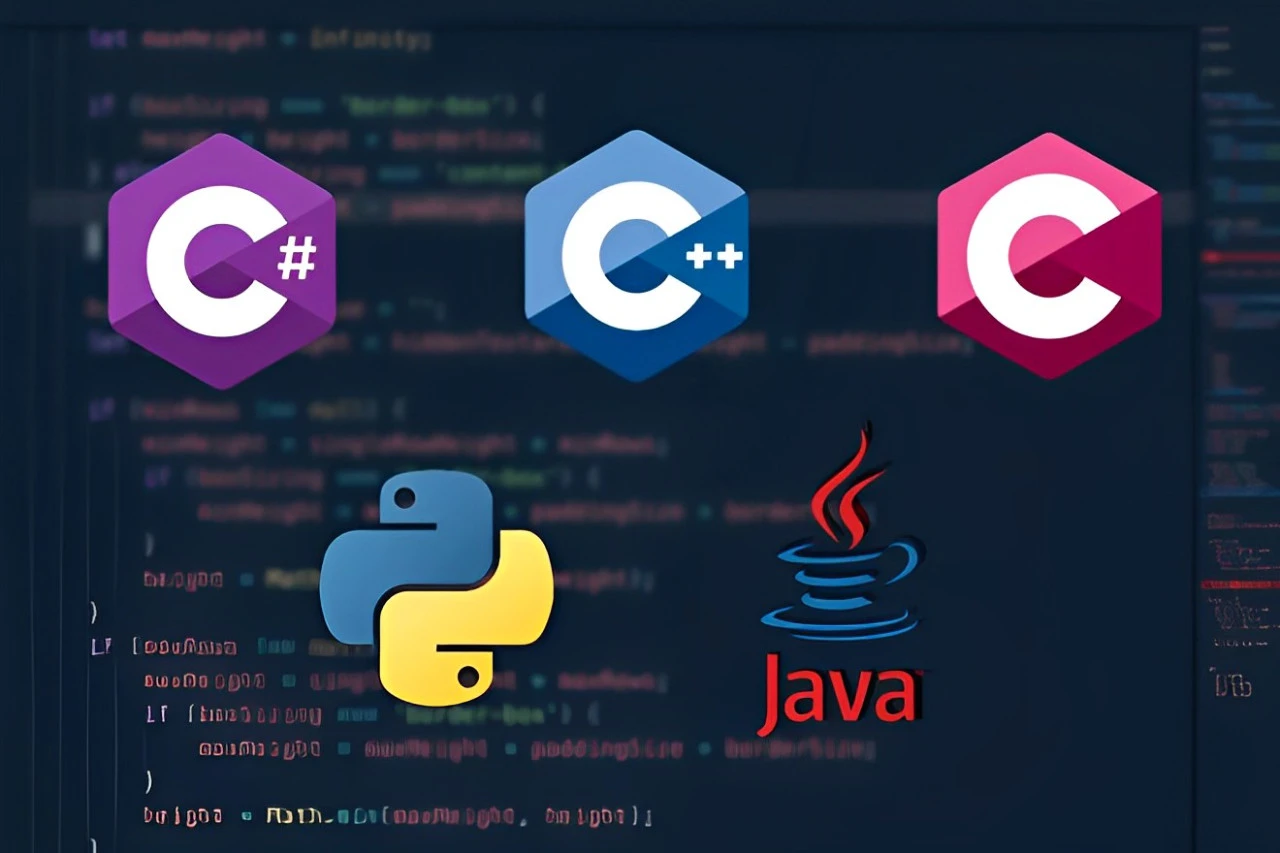
The IT industry is continuously evolving, and programming languages are the foundation of this dynamic change. The recent TIOBE Index ranking, published in January 2025, provides an overview of the most popular programming languages, analyzing trends and significant changes from the past year.
TIOBE Index Ranking – January 2025
|
Rank |
Programming Language |
Rating |
Change since January 2024 |
| 1 | Python | 23.28% | +9.32% |
| 2 | C++ | 10.29% | +0.33% |
| 3 | Java | 10.15% | +2.28% |
| 4 | C | 8.86% | -2.59% |
| 5 | C# | 4.45% | -2.71% |
| 6 | JavaScript | 4.20% | +1.43% |
| 7 | Go | 2.61% | +1.24% |
| 8 | SQL | 2.41% | +0.95% |
| 9 | Visual Basic | 2.37% | +0.77% |
| 10 | Fortran | 2.04% | +0.94% |
Python – The King of Programming Languages
No surprises, Python maintains its leading position, registering an impressive increase of 9.32% compared to last year. This language is favored by developers due to its versatility and ease of use, being employed in projects ranging from machine learning and data science to web development. Community support and extensive resources contribute to Python's continued popularity.
C++ and Java – Solid Competitors
C++ and Java remain in the top 3, and recent improvements to these languages keep them relevant in industries such as enterprise application development, embedded systems, and even video games. Java has recorded a considerable increase (+2.28%), indicating it is still a favorite among companies seeking stable and scalable solutions.
C and C# – Notable Losses
Although C and C# continue to be widely used, they have experienced a decline in popularity. C, a venerable language, faces the challenge of modernization against newer and more flexible alternatives. C#, although heavily used in the Microsoft ecosystem, has lost ground to other languages like Go and Python, which are gaining increasing traction.
JavaScript and Go – Rising Stars
JavaScript continues to be the pillar of front-end development, with a popularity increase of 1.43%. Its popularity is supported by modern frameworks such as React, Angular, and Vue.js. Go, on the other hand, is rapidly gaining followers due to its simplicity and performance, being preferred for cloud-native applications and microservices.
Fortran – A Surprising Comeback
Perhaps the biggest surprise this year is the return of the Fortran language to the top 10. Created in the 1950s, Fortran is still widely used in niche fields such as scientific computing and high-performance engineering, where optimization and precision are essential.
What’s Next?
The TIOBE Index ranking clearly shows that developers are moving towards languages that prioritize productivity, performance, and adaptability to new technologies. As artificial intelligence, IoT, and cloud solutions continue to grow, significant changes in this ranking are likely in the coming years.