
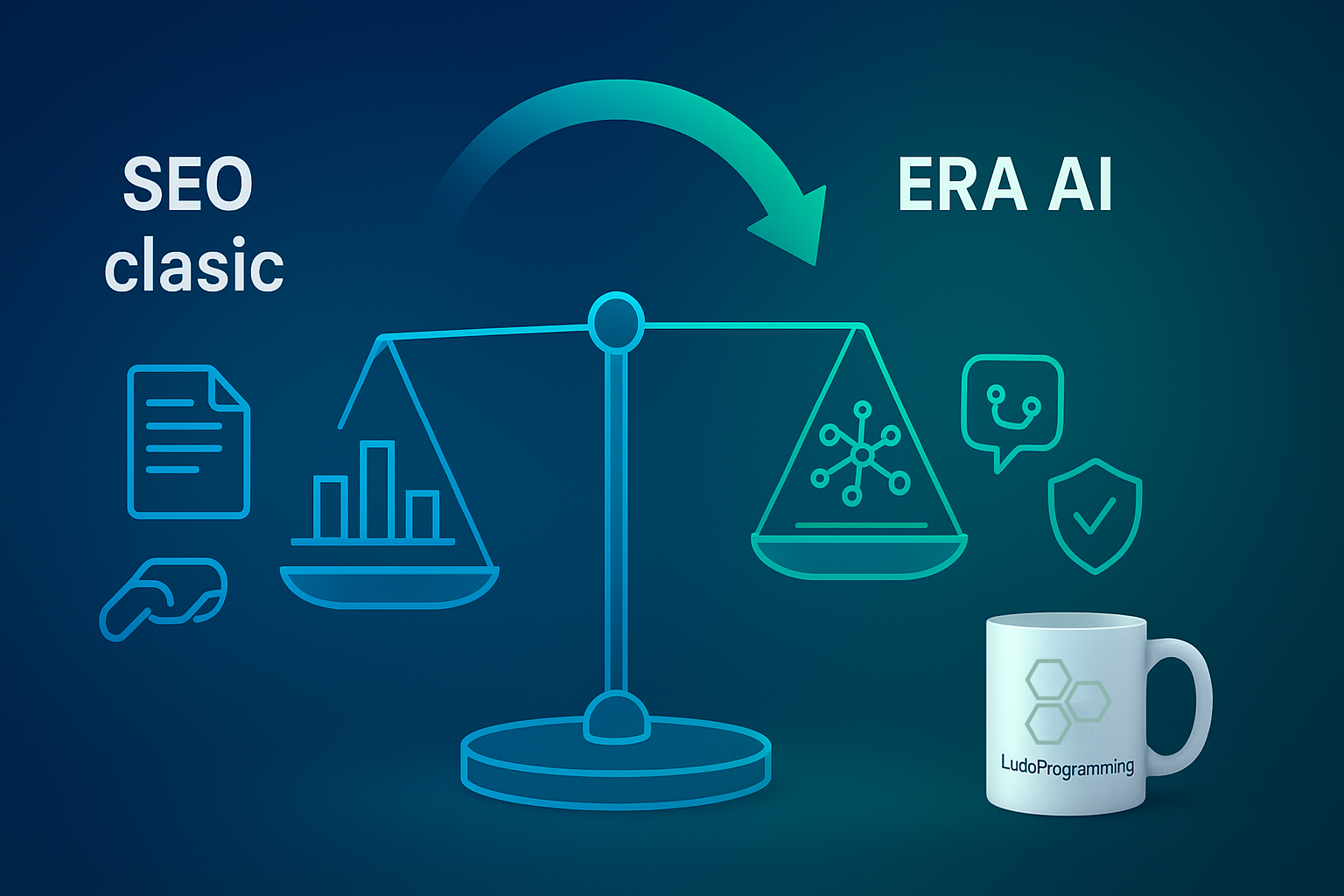
SEO is not disappearing, but it is being rewritten from the ground up. In a world where millions of users ask questions directly to AI models – ChatGPT, Gemini, Claude, Perplexity – the "classic" Google ranking is no longer the only stake. For a site or brand that wants to remain relevant, adaptation becomes mandatory.
Below are some key directions that define the new game of digital visibility.
1️⃣ Quality and niche content
Back when Google dominated without rival, many sites relied on "keyword stuffing" – the excessive insertion of keywords to achieve high positions. Today, this type of content is quickly penalized, both by Google and AI models, which recognize the lack of real value.
The new rule is simple: write for people, not for algorithms.
Niche, well-researched articles that bring real information, case studies, and unique perspectives are easier to be picked up and "read" by AI. Instead of trying to be a generalist, it is more effective to choose a clear domain and become an authority in that space.
Practical example: if you write about cybersecurity, an in-depth guide on "how to set up multi-factor authentication on various platforms" will be much more valuable than a generic text about "what IT security is".
2️⃣ Content structuring: clarity for AI
AI models and search engines "understand" content through how it is structured. A long text without subtitles, clear paragraphs, or visual elements is hard to process.
Therefore, structure becomes essential:
-
Headings (H1, H2, H3) → mark the hierarchy of ideas.
-
Bullet or numbered lists → facilitate quick extraction of information.
-
Tables and clear data → provide a "ready to read" structure for AI.
-
Images with descriptions (alt text) → visually contextualize the content.
In short, think of your articles as semantic databases. If AI can quickly browse and synthesize them, you have a better chance of appearing as a source in generated answers.
3️⃣ Personal branding and site authority
Another major trend: people start asking AI directly about specific sources. Instead of "what are the best resources for learning C#?", the user might write "show me articles from LudoProgramming about Blazor".
This behavior changes the game. If your brand has authority and credibility, people will invoke it directly.
This means:
-
signing your articles with real names, not just "team X";
-
building an online reputation through appearances, interviews, podcasts;
-
maintaining consistency in content quality and style;
-
creating a "community" around the brand.
In the long term, this type of personal branding is stronger than any technical optimization.
4️⃣ Structured data (Schema.org)
The last piece, often ignored but extremely important: structured data.
Google has been using schema.org for years to better understand what a page represents: article, recipe, event, review, product, etc. AI models go even further: they look for clear semantic structures to "understand" the source.
Useful examples:
-
for a blog article → Article or BlogPosting schema;
-
for products → Product + Offer;
-
for reviews → Review + Rating;
-
for events → Event.
Thus, not only do you help AI extract the correct information, but you also increase your chances of appearing in rich snippets or being directly quoted in AI responses.
📌 Conclusion
SEO no longer means chasing the "number 1 position on Google". In the AI era, visibility is earned through:
-
deep and niche content,
-
intelligent structuring,
-
building a personal or site brand with authority,
-
and using structured data to be interpreted correctly.
In short, you have to play long-term and think of content as a valuable asset, not just a traffic tool. AI rewards quality, and brands that understand this change will stay ahead.