
As mentioned in a previous article, keyword targeting involves more than just a string of words and phrases repeated in the same form, thus diminishing the meaning and normal flow of a text. Using keywords brings numerous benefits if they are placed where they should be and where they are searched for. Let's take them one by one.
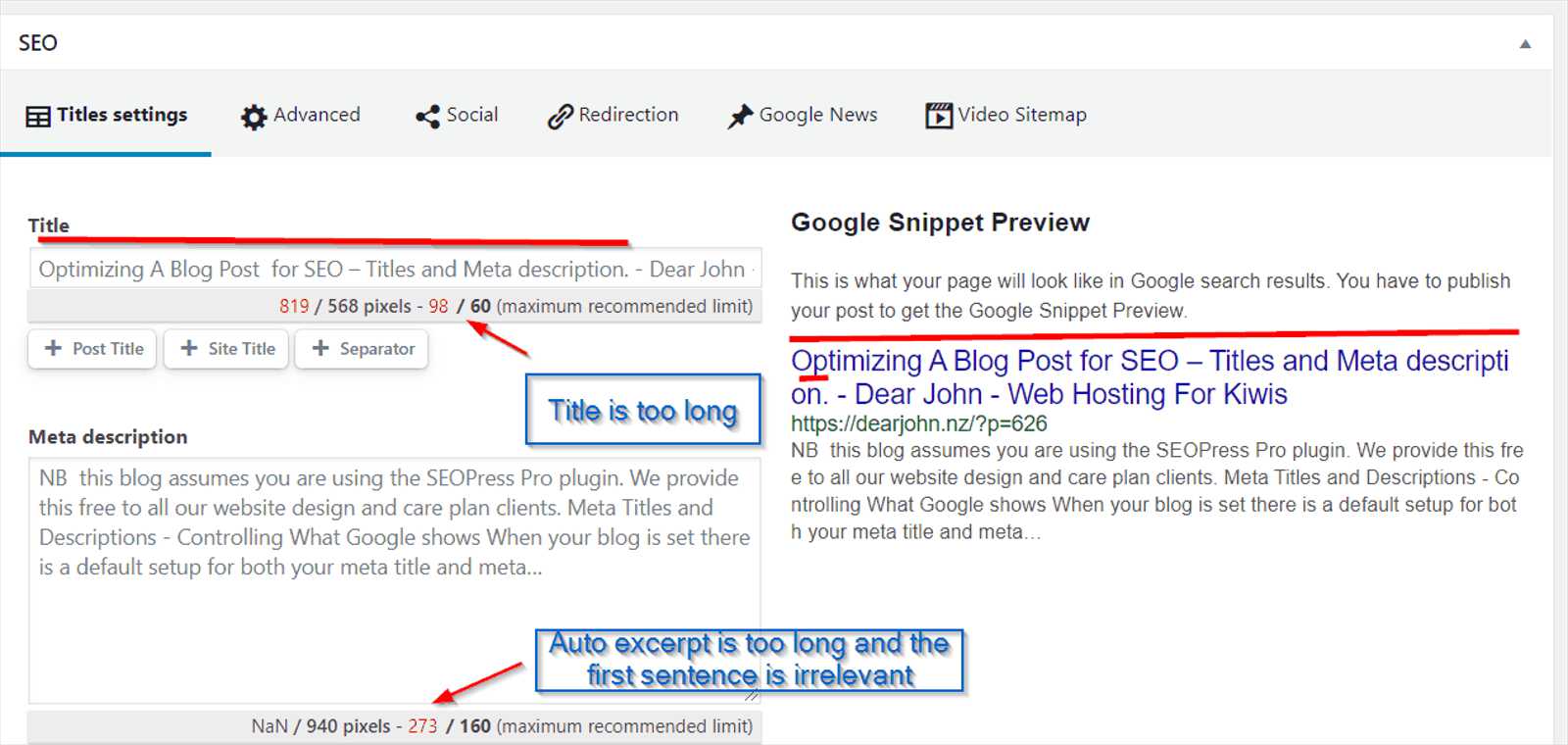
1. Page title. Using keywords in the page title is mandatory, but not sufficient. The position of the keyword within the title also matters a lot. It is preferable for it to be among the first 2-3 words of the sentence, not among the last. Its position sends a message both to search engines, which consider it more relevant, and to users. Associating the keyword with other significant words for the subject within the title attracts even more interest from those who searched on that topic.
2. Headline - the title on the page or the H1 tag. Often, I have noticed that the page title does not correspond to what the visitor actually finds on the page. In other words, the page title is nowhere to be found on the landing page, although it should be reproduced, if not entirely, at least partially, in the title that appears on the landing page. Many who write web page content choose to use one title for the page, even though the article or information presented there has a completely different phrase as a title. This can mislead visitors because they expect to find on the site the phrase for which they clicked in the search engine.
3. Body text. As mentioned, the text itself must be coherent, easy to read and understand for those it addresses, and not coded for search engines. It should not be filled with senseless repeated keywords. We will not insist further on this subject.
4. URL. A URL must contain the chosen keyword. Its form influences both search engines and the user. If the URL is properly written, it will be easier for the visitor to copy-paste it and share it.
5. Images and their ALT attribute. Even though Google has changed its interface and thus decreased the importance of images, they are still very important and obviously and constantly contribute to indexing and displaying pages by increasing relevance. For search engines, several elements matter when it comes to images: the title, the file name, the text – the context in which the image appears, and the image's ALT attribute.
6. Internal and external links. Although sometimes controversial, the importance of internal and external links is proven by practice. Ranking algorithms take into account quality links, both internal and especially external ones. The way these links are connected to the text also matters.
7. Meta description. Another controversial issue. Although some claim that this field is not included in the indexing algorithm, the meta description is displayed on the search engine results page, and the keyword appears in bold. In other words, it is taken into account, so it should not be forgotten or neglected. Moreover, since it appears on the results page, the way the description is formulated can decisively influence whether the user clicks and enters that page or not.
Our small on-page optimization guide for search engines includes some elements known and very well known to those working in the field. However, some of them minimize the importance of certain details which, most of the time, can make the difference.