At the time of its appearance, many people did not know what a computer was or how to use it. The Internet was also not widely known. Gradually, Apple managed to make this device one of the most sought-after pieces of equipment in the world, right from the early years. Below, we have chosen to present some of the most important computers released by Apple, some of which are perhaps known to us only from movies.
1984. The first computer model launched by Apple was called Macintosh 128k and it first appeared during the 18th edition of the Super Bowl in 1984, in a commercial directed by Ridley Scott, which referred to George Orwell's famous novel "Nineteen Eighty-Four" ("1984"). The first personal computer with a graphical user interface that came at an affordable price. The monitor was integrated into the central unit, with a mouse and keyboard as peripherals.
1987: Macintosh II – a major change brought to the old model. It is the first device with a color screen, offering the possibility to have installed a card capable of supporting up to 16.7 million colors.
1991: PowerBook 140. Although it had a predecessor, this computer is considered to be the first portable computer offered by Apple. The previous model was much heavier and could be purchased at a price too high to be accessible to everyone.
1993 is the year when the first compact color Mac appeared - Macintosh Color Classic. Its appearance continued the classic style of Apple computers.
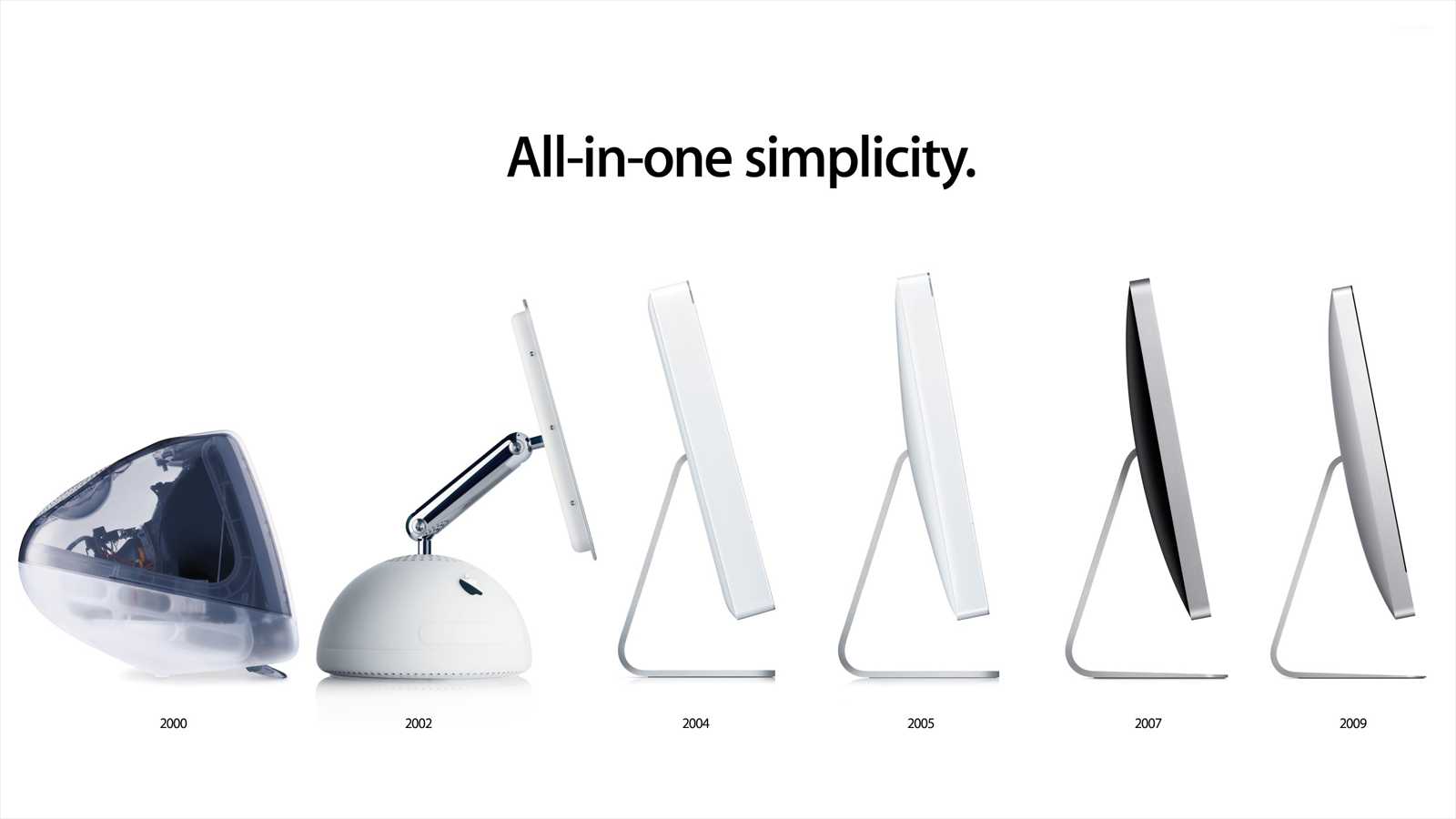
1998. This year brought the iMac G3 model, perhaps the best-known iMac G3 from Apple's old generation. The model introduced several innovations, including the use of USB to connect the keyboard and mouse, as well as other components. However, the feature for which it is known to the general public, especially in our country, is the distinct color of the device. Its casing was made of translucent plastic ("Bondi Blue"). It was available in several colors, among which the most common were indigo, pink, snow (transparent white), violet, orange, and lime (green).
In 1999, the iBook appeared, a portable computer eagerly awaited by Apple fans. The newest and most exciting feature of the iBook was the inclusion of AirPort, a wireless networking system based on existing industry standards. AirPort allowed up to 10 iBooks to connect to a single base station, which could then be connected to an existing Ethernet network or a standard telephone line. The iBook also had a built-in antenna and a standard PC card slot for the AirPort card.
2002: iMac G4. Due to its design, this model is also known as the Sunflower. The computer's central unit also served as the base and support for the much thinner and lighter monitor than previous ones.
The year 2006 brought an innovation with the introduction of the MacBook Pro series, with an aluminum case and an Intel Core 2 Duo processor, much faster than previous ones.
We stop the Apple history at the year 2008, when the MacBook Air was launched, the new generation of laptops. Its promotion was mainly based on the fact that it is "the thinnest laptop in the world," while also weighing very little.