
🗓️ 2025 – Apple in first place
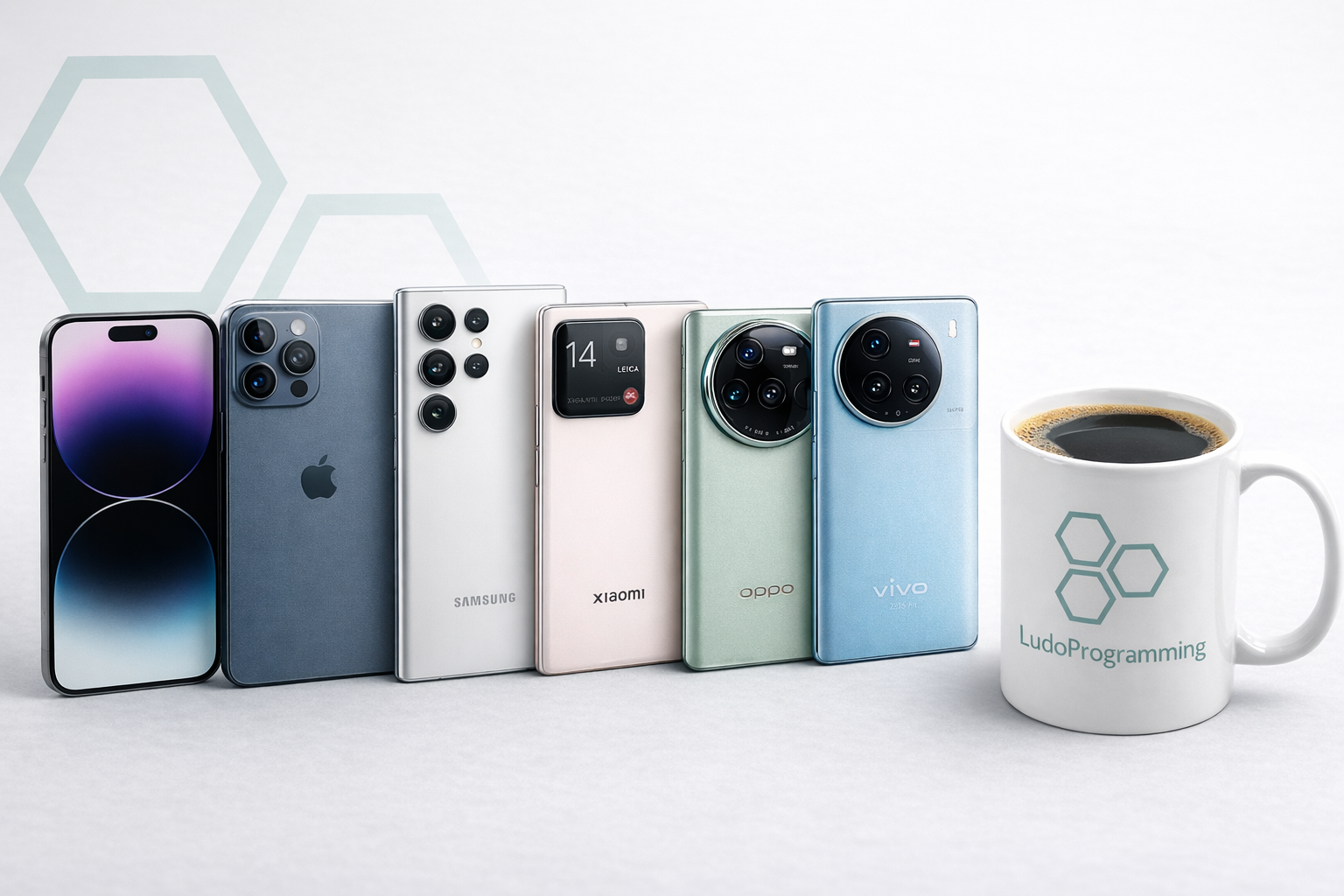
In 2025, Apple took first place in the global smartphone shipment rankings, surpassing its traditional rival Samsung. Apple achieved approximately 20% of the global market share, while Samsung remained close, at ~19%. Xiaomi ranked third (13%), and vivo and OPPO completed the top-5 ranking.
🔎 Main factors:
-
The success of the iPhone 17 and iPhone 16 series, with strong sales in key markets such as India, Japan, and Southeast Asia.
-
Apple's annual shipment growth (+10%) was the highest among the top 5.
📦 Other data for 2025:
-
Total global shipments: ~1.26 billion phones.
-
Apple shipped approximately 247.8 million units, Samsung 241.2 million, Xiaomi 165.3 million, vivo ~103.9 million, and OPPO ~102 million units.
📈 2024 – Samsung and Apple nearly tied
According to preliminary data analyzed by research firms, in 2024:
-
Apple and Samsung had very close market shares, with Apple often dominant in Q4 thanks to the iPhone 16 and iPhone 15.
-
Xiaomi maintained the third position, and vivo and OPPO showed solid performances, especially in markets such as India and Southeast Asia.
📊 Example data from 2024:
|
Brand |
Approximate share |
|---|---|
|
Apple |
~18-23% |
|
Samsung |
~16-18% |
|
Xiaomi |
~13-14% |
|
Transsion / OPPO / vivo |
~7-9% |
🔎 Source: mixed data IDC / Canalys 2024.
📉 2023 – Apple and Samsung were in 1st and 2nd place
According to historical analyses:
-
Apple sold ~234.6 million phones (~20.1% share) and surpassed Samsung in a historically significant year.
-
Samsung was very close with ~226.6 million units (~19.4%).
-
Xiaomi, OPPO, and Transsion completed the top 5, showing strong presence in the budget and mid-range segment.
📊 2022 – Samsung still leader, but Apple close
In 2022, according to IDC/Wikipedia:
-
Samsung shipped ~260.9 million phones (~21.6%).
-
Apple had ~226.4 million (~18.8%).
-
Xiaomi, Oppo, and Vivo continued to grow, completing the top-5.
📱 2019 – Samsung dominated
In 2019:
-
Samsung was the leader with ~272 million units (~21-22% market share).
-
Apple had ~237 million (~16%).
-
Xiaomi, Oppo, and Vivo began to become consistent competitors in the top 5, a trend that intensified in the following years.
📌 Major trends observed in the last 5 years
💡 1. Apple has grown steadily
From a solid #2 position in 2019-2021, Apple began to close the gap with Samsung and, in 2025, even surpassed it in the global ranking, mainly through strong sales of premium iPhones.
📉 2. Samsung remains a main competitor
Samsung has remained consistently very close to Apple and, in some quarters, even the leader – but its share has remained relatively stable, and the gap with Apple has narrowed in recent years.
📈 3. Xiaomi has stabilized in third place
Xiaomi grew in previous years and has remained consistently in third place, with strong adaptation in emerging markets for affordable and mid-range smartphones.
📊 4. vivo and OPPO – consolidation
The two Chinese brands have maintained positions 4 and 5, with variable growth depending on the orchestration of retail chains and presence in emerging markets.
📉 5. Other players
Brands such as Transsion (Tecno, Infinix, itel brands) occasionally appear in the top-5 in some quarters, but do not destabilize the positions of the top five over the entire year.
📍 Conclusion
The global smartphone market has evolved significantly in the last 5 years:
-
2019-2022: Samsung dominated, Apple was close in second place.
-
2023-2024: Apple and Samsung shipped very close quantities, with Apple benefiting from upgrade cycles.
-
2025: Apple became the global leader for the first time in 14 years, supported by growth in iPhone shipments.
This change reflects both consumer trends toward premium and different regional strategies – for example, Apple's growth in Asia and the maintenance of competitiveness by Samsung and Xiaomi in the mid-range segment.