I have previously talked on this blog about the importance of content well illustrated with images, video content, or other such elements.
A properly illustrated article has a much higher chance of being read and then shared with others.
For maximum results, we need to create the images we use ourselves. We can all take images from the internet and throw them on the site. But that is not the goal. The goal is to stand out, to differentiate ourselves, and to show through images exactly what we want, not what we find.
There are five elements that can be used to make your article visual.
• Photographs – of places, objects, people, events, or interesting concepts
• Graphs – very good for illustrating the numbers behind a detailed article
• Screenshots – or screen captures with examples and explanations or notes of what is presented
• Drawings – very useful for illustration
• Mini comics – those comic drawings that tell a story in an attractive way.
Let's take them one by one.
a) Photographs. Depending on the specifics of each business, photographs can be the best ally. For example, in the case of a gastronomic site, travel site, online store, or many others, photographs are at home. You take photos in your own yard. You don't have to pay exorbitant amounts or do costly things. The important thing is to have very good lighting and some talent to modify them a little afterward. The resolution of the photographs is preferably as good as possible to maintain all the details.
b) Graphs. Very useful in any field. They can be made based on the data we already have or we can conduct various surveys to have new, fresh, and especially unique data (meaning unpublished).
Graphs can be created quite easily using common editing programs. If we don't have the technical knowledge to make such a graph, we can always turn to those who know how. There are many students who can easily make these graphs for modest sums of money.
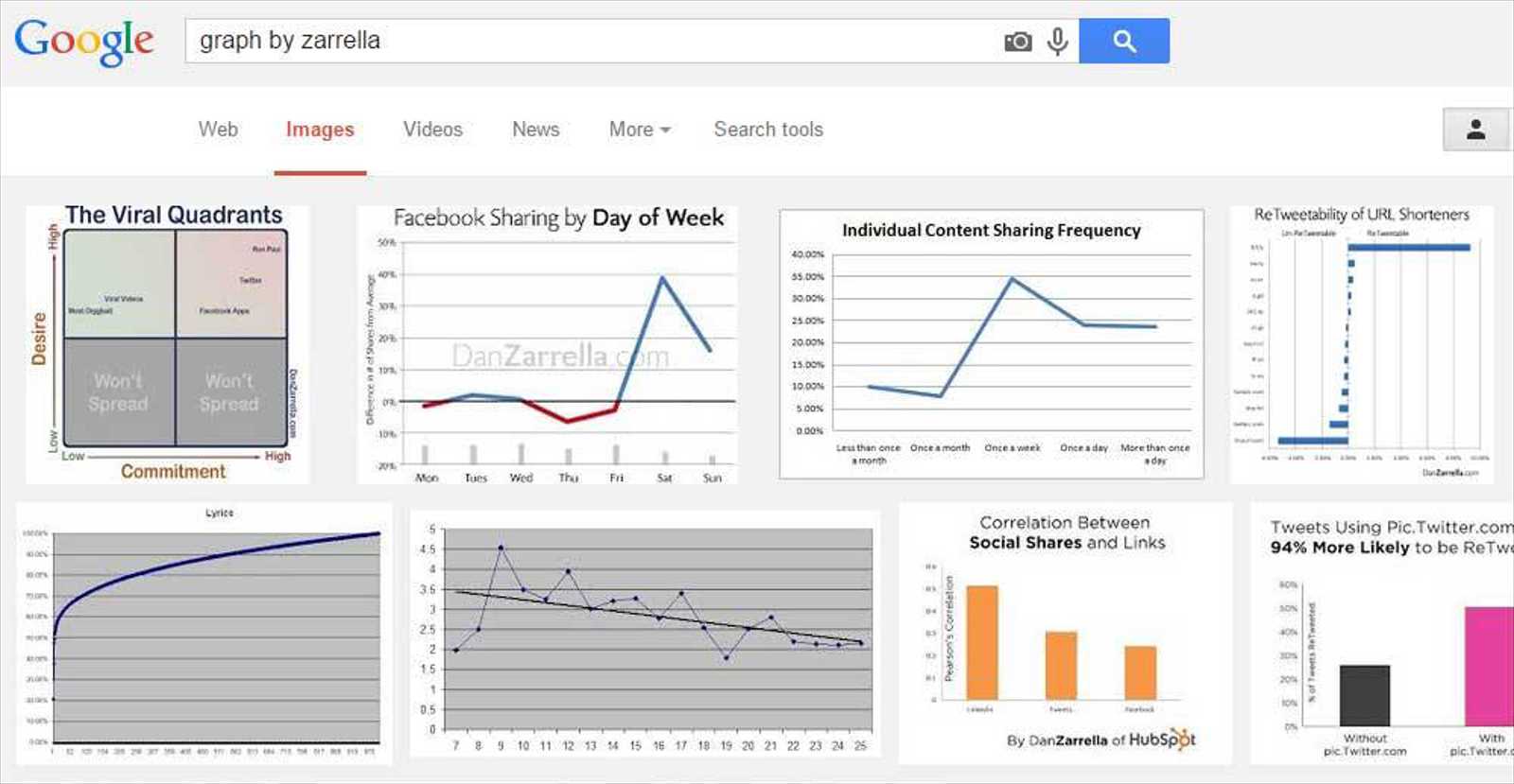
An example of such graphs is given by Dan Zarrella, who can be found very easily on the internet.
c) Screenshots. Represent a much faster and easier way to get illustrations for your article. Carefully chosen, these must be accompanied by explanations of what they contain and why those particular frames or sites were chosen.
There are several ways to take screenshots, either from the keyboard, with a small program installed directly with Windows, or other programs like JING or Evernote.
GIF-type animations can also be added just as well, which are not hard to make if you have a little inventiveness.
d) Drawings. When we say drawings, we do not mean classic drawings, but those graphs or drawings made digitally. And for these, you need to know a bit to get exactly what you want.
The solution is to turn again to an acquaintance who knows how or to a person who does this daily and can help you for a modest sum. I am not saying we should pay little for others' work, but I am saying it doesn't cost much to have someone make a professional drawing for us.
These ideas can be applied more easily when it comes to a site or blog that also expects conversions following the published articles. Blogs made out of passion do not need to resort to too complicated things, but authenticity and individualization matter in the vast sea of online blogs.
e) Mini comics. We all know them. They became trendy last year and seem increasingly present online. They also appear more often offline, even in TV spots or various prints. Personally, I am not very fond of them because I find them hard to read and follow. However, they can be successful if they are not too extensive and convey an easy-to-read and humorous message.
I will illustrate what I said with such a drawing, which you can find on Fire Pole.
We also have comic authors here who illustrate books but also make illustrations for various other publications, online or offline. One of them is Mihai Grajdeanu, for whom I have great admiration.
The possibilities for illustrating articles are countless. You can choose what suits you best or you can try testing them to see which one has a greater impact. There is no recipe for success.
Good luck!