

One of the most frequent questions we are asked is related to Facebook: How can we use Facebook page statistics to improve our online presence?
The answer is simple: it helps us get to know our audience.
There are a few things we need to point out from the start in order to talk about these statistics and how we can use them to our advantage. First of all, to have statistics, you need to have a page, not a profile. Beyond the fact that Facebook penalizes such practices and may even close the account if it is used for a product or company and not for a person, the profile does not provide data about its activity. So, the first thing you need to do is create a page dedicated to the company, product, service, or idea you want to promote.
To access statistics, the page must gather a minimum of 30 likes, which is not hard to achieve if you send invitations to friends from your list. After surpassing this threshold and setting the correct time, you can effectively work with the statistics. As expected, the more followers the page has, the more relevant and useful the collected data will be.
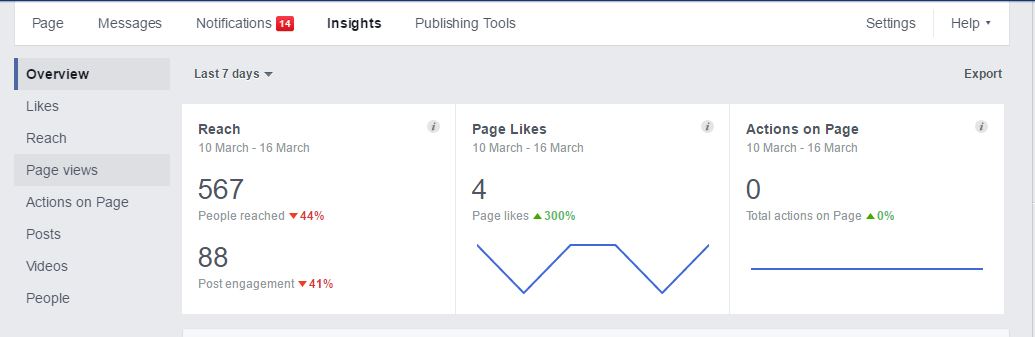
You can track how many likes you received in a certain period, whether they are organic or paid. Additionally, you can monitor the actual engagement of people with what you do on the page. This is one of the most useful tools because you can compare the types of posts, the times they are displayed, and what exactly prompts people to comment, like, or share.
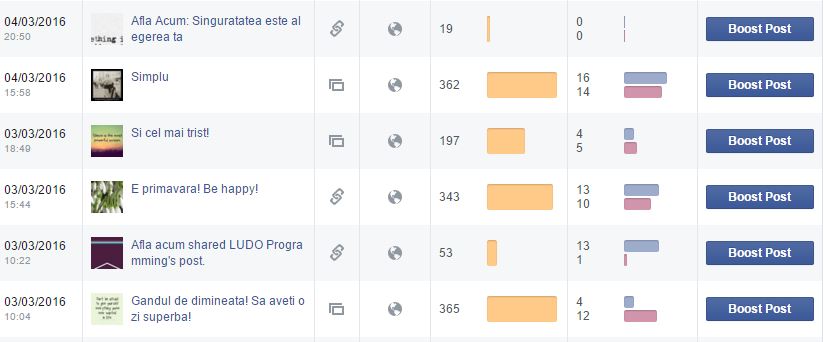
Thus, you can publish various types of content on the page: images, plain text, links to various websites, links to your own site or blog, videos, or anything else. You can – and it is actually good to – vary the time, try different time slots, so that you have as wide a range of information as possible.
Equally useful in finding the best times to post on Facebook is the following chart
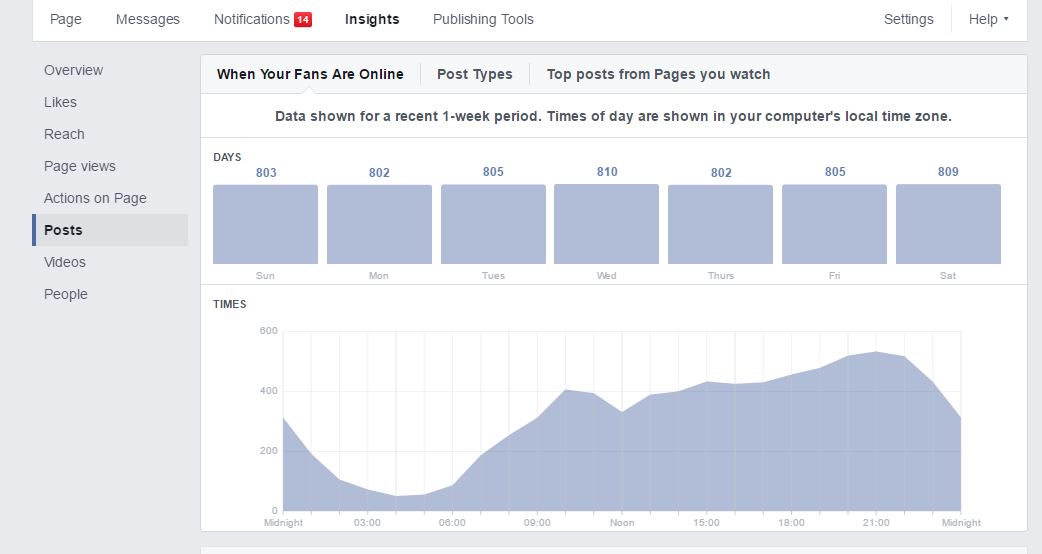
Here are displayed the hours when people interested in what you publish are on Facebook and willing to interact. This way, you will know when it is advisable to display certain content to reach as many people as possible.
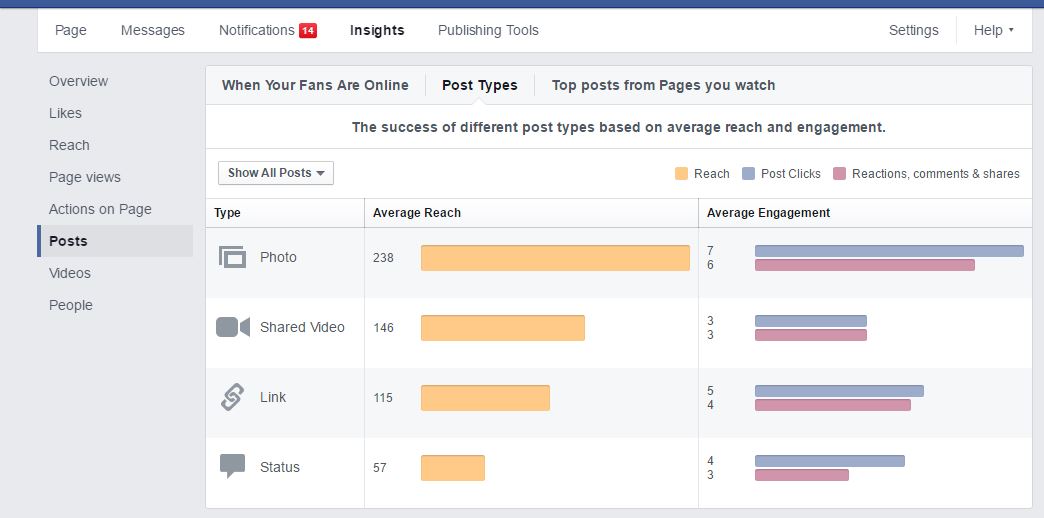
The image above is extremely relevant and important. Based on this statistic, you find out what suits your audience best. However, keep in mind that this proportion is not universally valid but depends greatly on the type of business or idea promoted.
Also, depending on the specifics of the business and implicitly the page, you can analyze the audience from a demographic perspective. In our example, the female predominance is clear, but the page is also gender-specific. However, if the goal is to attract more men, for example, but the analysis shows there are more women, it means you are not doing something right and it is time to rethink your strategy.
Age is also very important. Depending on it, you can adjust both your language and your posts. If the audience is young, then you can be less formal, add cutting-edge elements, things that concern them beyond the exclusive theme of your page.
What matters, however, is to always try, check, adjust, and check again. Nothing remains unchanged; everything transforms rapidly, so a periodic check is not enough. Constant comparison is the key to progress.