
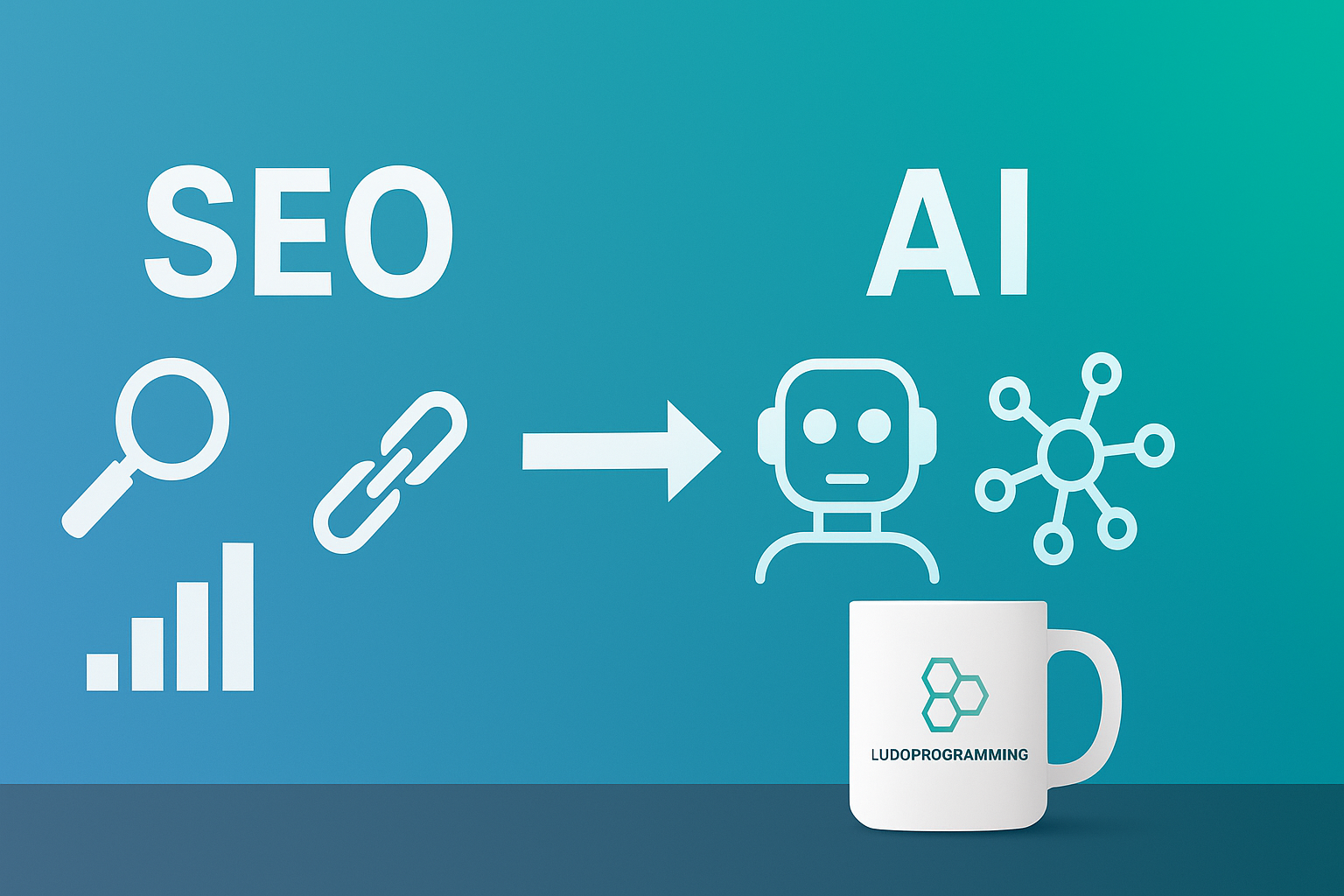
As artificial intelligence integrates more deeply into the digital experience, SEO does not disappear — it transforms. The next stage already has a name: AIO – AI Optimization.
If in the past optimization meant "explaining to Google" what your page contains, now you have to "explain to the AI" — language models that take over, interpret, and deliver answers.
🔹 From SEO to AIO
AI no longer displays links, but direct answers. This means your site must:
-
provide clear, structured, and easy-to-quote information;
-
have verifiable sources and trustworthy content, so that AI considers it relevant;
-
include semantic signals – meta data, JSON-LD, logical tags – for correct interpretation.
AIO is not based only on keywords, but on context, semantic relationships, and credibility.
🔹 SEO becomes part of an ecosystem
The future of online visibility no longer means "being first on Google," but being mentioned, cited, and used by AI.
SEO will work together with:
-
content marketing – documented, authentic articles with clear authorship;
-
domain authority – how often you are mentioned and recommended;
-
omnichannel presence – your brand must exist coherently on the website, social media, podcasts, newsletters, etc.
This interconnection transforms SEO from a technical discipline into a strategic and human one, where expertise and reputation matter more than keyword density.
🔹 How to prepare for the new wave
-
Optimize for AI, not just for humans: use semantic markups (Schema.org, OpenGraph).
-
Build an "AI-ready brand" – create consistent, signed, transparent content.
-
Test AI visibility – ask ChatGPT, Perplexity, or Gemini about your brand and see if you are mentioned.
-
Invest in real experience (E-E-A-T) – only authentic experts will be sources for AI.
🔍 Conclusion:
SEO is not dying, but becoming part of a larger mechanism — AI Visibility.
Those who learn to communicate clearly with AI will be the new digital leaders of the next decade.