
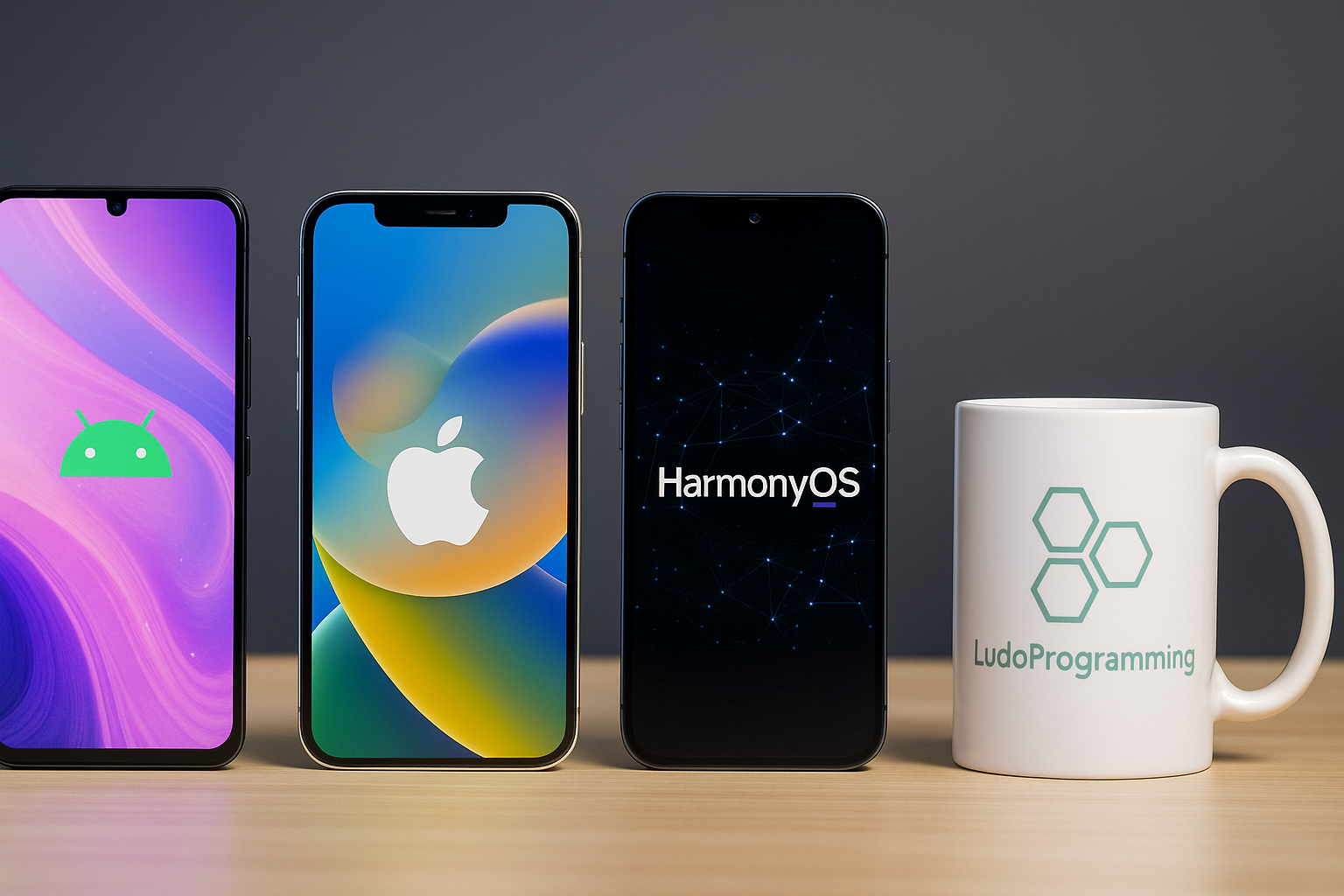
Mobile phones have become an extension of our daily lives, and the operating system is the heart that brings them to life. From the way we browse the internet to data security or compatibility with other devices, everything depends on the system running behind the scenes. In 2025, the competition between Android, iOS, and HarmonyOS is tighter than ever, each coming with distinct strengths and limitations.
Android – flexibility and diversity
Android, developed by Google, remains the most popular mobile operating system in the world, with a market share of over 70%. It is built on a Linux kernel and is open source, which means manufacturers can adapt the system for their own phones. This explains the huge variety of models from Samsung, Xiaomi, OnePlus, or Motorola.
Advantages:
-
You can choose from hundreds of different models and brands.
-
Allows deep customization of the interface and functions.
-
There is a huge range of apps in the Google Play Store.
Disadvantages:
-
System fragmentation: not all phones receive updates simultaneously.
-
Security can vary depending on the manufacturer and the source of the apps.
Android 15 brings major improvements in 2025 in privacy management, energy consumption optimization, and native integration of artificial intelligence for smart suggestions and automations.
iOS – simplicity and security
iOS, Apple’s operating system, stands out for a unified and controlled experience. Being developed exclusively for iPhone and iPad, Apple can perfectly optimize the performance between software and hardware. The result? A smooth, stable, and extremely secure system.
Advantages:
-
Simultaneous updates for all compatible devices.
-
High level of security and data protection.
-
Integrated ecosystem (iPhone, iPad, Mac, Apple Watch, AirPods).
Disadvantages:
-
Limited freedom of customization.
-
Phones and accessories are usually more expensive.
In 2025, iOS 19 emphasizes privacy and integration with Apple Intelligence – its own AI system that analyzes data locally, without sending it to the cloud, to maintain user security.
HarmonyOS – Huawei’s alternative
Born as a response to the restrictions imposed on Huawei by the United States, HarmonyOS has evolved from an emergency solution into a mature ecosystem. The system is based on its own microkernel, designed to work not only on phones but also on watches, TVs, cars, and smart devices.
Advantages:
-
Unified ecosystem across devices (phone → laptop → smartwatch).
-
Optimized performance and elegant interface.
-
Ability to run Android apps through native compatibility.
Disadvantages:
-
The app store (AppGallery) is still limited compared to Play Store or App Store.
-
Some Google services are missing, which can be a barrier for users outside China.
Huawei is investing heavily in local AI and in developing an independent ecosystem, making HarmonyOS 5 a real alternative for those who want a different experience.
Comparative table (2025)
|
Feature |
Android |
iOS |
HarmonyOS |
|---|---|---|---|
|
Freedom and customization |
✅ High |
⚠️ Limited |
✅ Medium |
|
Security |
⚠️ Variable |
✅ Excellent |
✅ Good |
|
Device ecosystem |
✅ Varied |
✅ Perfectly integrated |
✅ In development |
|
App store |
Play Store |
App Store |
AppGallery |
|
Device price |
From budget to premium |
Premium |
Mid to premium |
Conclusion
In the end, the choice of operating system depends on the needs and preferences of each user.
If you want freedom and diversity, Android is the natural choice. If you emphasize stability, security, and simplicity, iOS remains the leader. And if you are curious about innovation and integrated technology, HarmonyOS is worth watching closely — it is the system that could redefine the mobile experience in the coming years.