
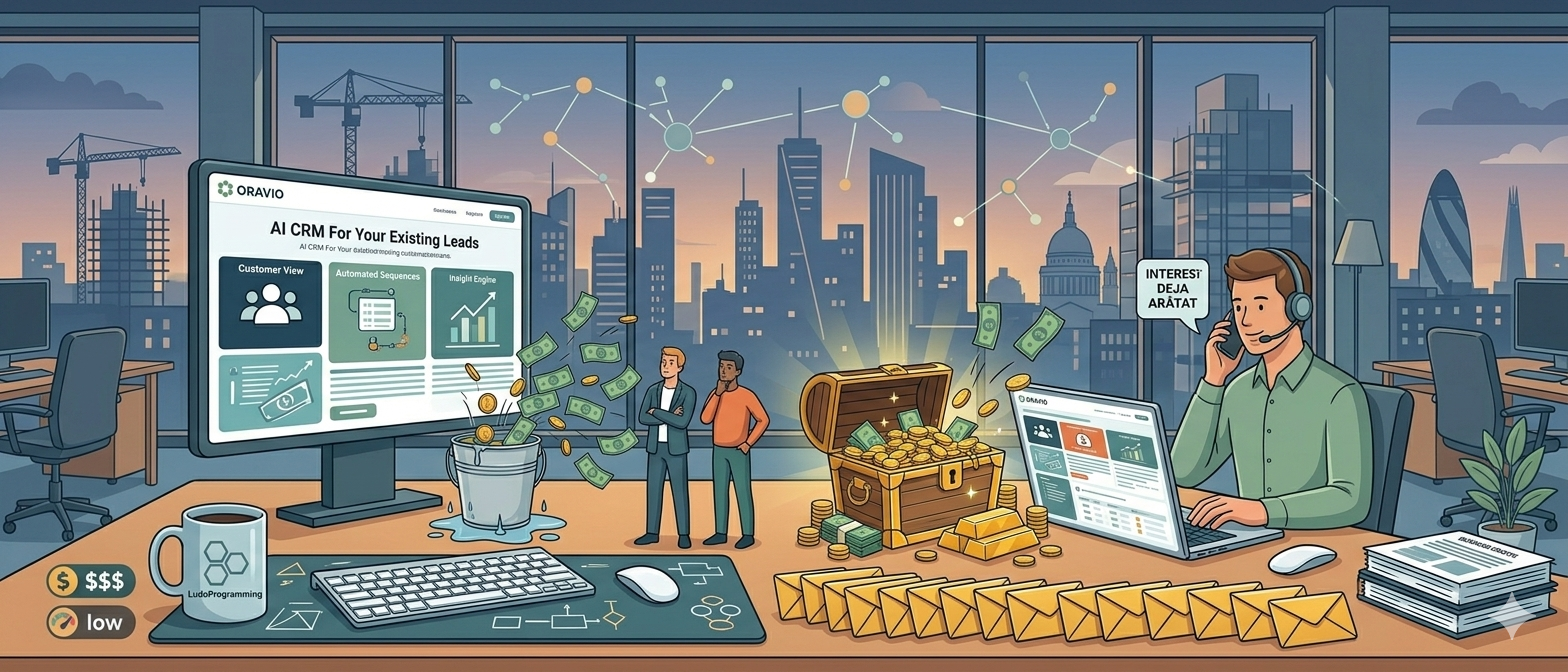
There is a frequently cited study in sales that says 80% of sales are made after the fifth contact with a potential client. And that 44% of salespeople give up after the first follow-up.
If these figures are correct — and practical experience largely confirms them — it means that most businesses leave a huge amount of money on the table because of one thing: they do not follow up with people who have already shown interest.
Ads bring new people who don't know you. Follow-up leverages people who already know you. Which do you think is cheaper to convince?
What follow-up really is
Follow-up is any form of contact initiated by you after a first exchange with a potential or current client. It can be:
— An email sent after an offer that received no response
— A WhatsApp message after a meeting or phone conversation
— A phone call to a client who hasn't purchased in 6 months
— An automated email sent after someone added products to the cart but didn't complete the order
— A greeting sent to a loyal client on the anniversary of the collaboration
It is not harassment. It is not aggressive insistence. It is resuming the conversation at the right moment, with the right message.
Why people don’t buy the first time
Understanding this is the key to effective follow-up. When someone does not respond to an offer or does not complete a purchase, there is usually one of these reasons:
It wasn’t the right time. The budget was not approved, they were busy, they had to discuss with a partner. It does not mean they are not interested — it means your timing did not coincide with theirs.
They forgot. It sounds simple, but it is one of the most frequent reasons. People are busy. Your offer arrived, was read, was appreciated — and was buried under other emails and priorities.
They were still comparing. They were in the evaluation phase, not the decision phase. A follow-up at the right moment can catch them exactly when they are ready to decide.
They had a question that was not answered. Something in the offer was unclear and they did not come back to ask. A simple follow-up — “Do you have questions about the offer sent?” — can unlock a sale stuck on a small question mark.
Follow-up versus ads — cost comparison
Let’s do a simple calculation.
A Facebook or Google ad that brings a new lead costs, depending on the field, between 20 and 200 RON per lead. Multiply that by the number of leads you need monthly and you get the ad budget.
A follow-up costs an email or a WhatsApp message. Approximately zero RON. Addressed to a person who already knows who you are, has seen what you offer, and has shown interest.
The conversion rate from a well-done follow-up is 3–5 times higher than from a cold lead obtained through ads. And it costs 10–50 times less.
There is no financial argument to ignore follow-up in exclusive favor of ads.
How many follow-ups are too many
The main fear of entrepreneurs when it comes to follow-up is that they will seem insistent or aggressive. This fear makes them not follow up at all — which is worse than following up one time too many.
A reasonable practical guide for a small business:
— Day 1: you send the offer or have the first conversation
— Days 3–5: first follow-up — short, without pressure, asking if they have questions
— Days 10–14: second follow-up — you can add new information, a reference, a relevant testimonial
— Day 30: third follow-up — direct and honest: “I understand that maybe now is not the right time. I remain available when the situation changes.”
Three follow-ups are not harassment. It is professionalism. If after three contacts there is no response, you can leave the person in the “review in 3–6 months” list and move on.
Follow-up for existing clients — the most ignored
Everyone thinks about follow-up in the context of new sales. But follow-up for existing clients is even more valuable and even more ignored.
A client who has bought from you and was satisfied is 5–7 times easier to convince to buy again than a new client. The retention cost is 5 times lower than the acquisition cost.
And yet, how many businesses systematically follow up with old clients? How many send an email 3 months after a collaboration with “How’s it going? Can we help with anything else?”? How many offer something relevant to a loyal client before they go to the competition?
A simple follow-up system for existing clients — even manually, on a calendar — can significantly increase the average value per client without spending a single leu on ads.
A simple follow-up system you can implement today
You don’t need expensive CRM or complex automations to start. You need:
A simple list — an Excel or Google Sheets file with the name, contact, date of last interaction, and status of each lead or client.
A calendar reminder — for each person on the list, a reminder on the follow-up date. Google Calendar is sufficient.
Some message templates — 3–4 follow-up variants ready written, which you personalize easily before sending. You don’t send the same message every time — but you also don’t write from scratch every time.
If you have more than 20–30 active leads simultaneously, a simple and free CRM like HubSpot CRM or Zoho CRM can automate part of the process. But to start, Excel and Google Calendar do the job.
Conclusion
Ads are necessary to bring new people. But follow-up is what turns interest into money.
If tomorrow you could choose between spending 500 RON on ads that bring 10 new leads or spending 2 hours following up with the 15 people who asked for an offer in the last 60 days and did not respond — the second option will almost always bring more money.
Follow-up is not aggressive. It is not insistent. It is the respect you show to a person who has shown interest — and to your own work of bringing them to you.